Tyres and vehicle electronics
Ford Fiesta: replacing rear tyre-pressure sensors
Ford Fiesta
This Ford Fiesta visited Vulcan Motors for two rear tyre-pressure monitoring sensors. The completed workshop record lists supply and fitting on both sides, with two sensors marked fitted.
View the illustration ↓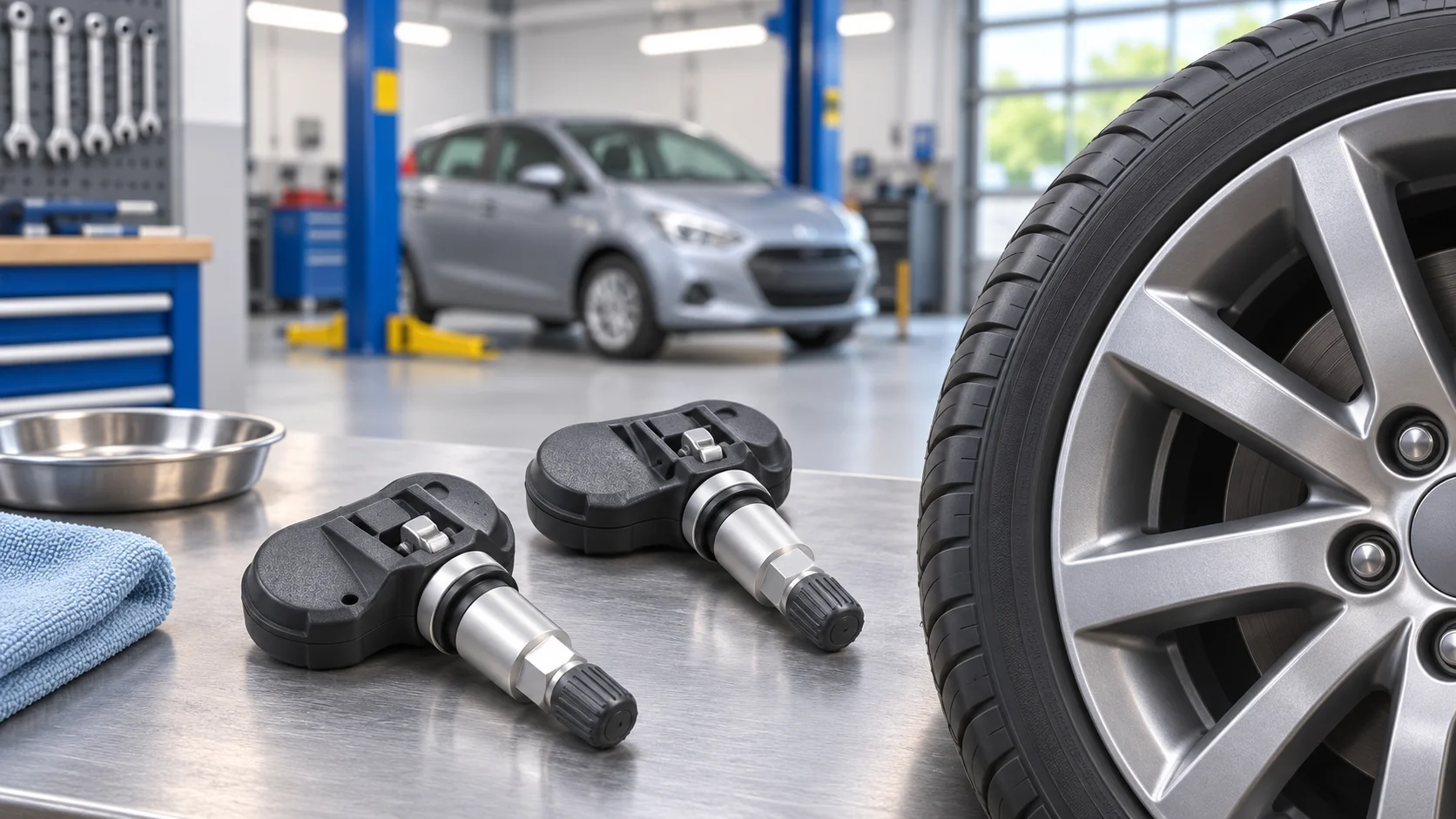
The work recorded
The completed job lists supply and fitting of a nearside rear and an offside rear TPMS sensor. Two sensors are marked fitted. The record does not establish the original fault, a programming procedure or the final warning-light status.
What TPMS does
Tyre-pressure monitoring systems help alert drivers to a pressure issue. Some vehicles use sensors at the wheels, while others use a different monitoring method. A warning should be investigated alongside an accurate pressure and tyre-condition check.
Why the right part matters
Wheel sensors and their valves must be compatible with the vehicle and its monitoring system. Requirements for sensor configuration or relearning vary, so the correct process is assessed for the specific vehicle rather than assumed from another model.
Looking after your tyres
Check tyre pressures regularly using the manufacturer’s recommendations and inspect the tyres for damage or unusual wear. If a warning persists, or a tyre is visibly damaged or losing pressure, contact the team for advice before continuing to drive.
Discuss a warning with us
When booking, provide the registration, the warning shown and when it appeared. Tell reception about recent tyre or wheel changes and any pressure loss, so the team can plan an appropriate assessment. The image is representative AI artwork, not a record of this repair.
Explore your options
The services behind this story.
Something similar in mind?
Tell us about your vehicle and what you need. We will discuss the assessment, compatibility and agreed scope for your own project.